BEHIND THE LENS: CONSENT
WRITER-DIRECTOR'S OVERVIEW | Yas Haghighat (Yas ATCK)
Sometimes in film, it’s about capturing a moment, but in this campaign for the Cheshire Constabulary, it was about capturing a movement.
In my previous life before the film industry, I worked as both an educator and in pastoral care in schools. During this time, I witnessed the gap between the reality that young people are living and the way we, as adults, often talk to them about it.
Consent is such an important topic. My thoughts in this director's write-up aren't just about writing the scripts and how we filmed it, but also it’s the context of why this campaign had to happen now. From the sobering data that Cheshire Constabulary gave me about peer-on-peer offences, to the undeniable influence of social media, I want to share the research and the "why" that shaped every frame of these films, and why I believe this conversation is the most important one we can start today.
This article has been adapted from the presentation speech I gave at the premiere of the campaign at Cheshire's Odeon Cinema.
As I mentioned, I spent a number of years in both the UK and abroad working as a teacher, as well as in the pastoral department of a boarding school. I know first-hand what it’s like to work with children and where their interests lie; I know what it’s like to carry that responsibility of seeing children come away from whatever’s happening at home, and step into the safety of your classroom. I know what it’s like to try and impart wisdom upon children, and on that...I also know what their very short attention spans are like!
I remember the year that all of the staff at one of my schools had to undergo extensive safeguarding and cyber training after an incident involving the Year 10s, where an indecent image was circulated around the year group of one of their classmates.
SOME PERSONAL CONTEXT
It was an incident that’s stuck with me and was at the forefront of my mind when I started alongside the Cheshire Constabulary campaigns team for this project on consent.
Throughout this campaign, I drew on my experience, but also remembered what it was like being a teenage girl myself.
We’ve all been 15 years old. Sex isn’t easy to talk about, let alone all the nuanced conversations that happen around the topic. Consent is even more of a difficult subject to talk about. Back in 2003 if you asked the 15 year old me what ‘consent’ meant, I’m not sure I’d really understand.
If you asked me again at the age of 18, I would have understood the word, but not made the correlation between the topic and all the times someone put their hands on me in a dingy club. My friends and I used to roll our eyes and laugh about it - it was so normal that we just got used to it. I shake my head when I think back on that, because that was nearly 20 years ago and I can’t believe that this is sadly still the same now. Just because it was (and is) the norm, doesn’t make it right.
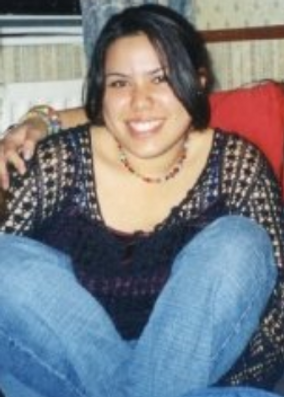
I was 18 when I first got Facebook. It’s now 2026 and I don’t think I know anyone who doesn’t have some form of social media. It’s everywhere. Even children below the age of 13 are on it.
With the advent of the social media generation, topics around sex and consent are starting to pick up traction. Young people are talking about it more than when I was their age. They know what ‘consent’ means and they understand it enough to try and educate each other.

And social media is increasingly the place where young people turn to for education. The amount of comments that I see when I’m scrolling through that say “I learn more on social media than I do in school” tells you a lot about how influential these platforms are; whether they are right or wrong, this is the current sentiment.

However, with the rise of socials, there also comes a huge amount of unregulated, dangerous content and toxic influencers that counter the wave of any positive movement. Just look at someone like Andrew Tate and his huge following. A friend of mine is a secondary school teacher and reported to me that boys in their Year 7 tutor group think that Andrew Tate is ‘iconic’.

There is content fighting for open conversations around sex and consent in both heterosexual and queer spaces, but unfortunately for young people, these all seem to currently exist within the confines of social media; these topics do of course exist in longer-form content and films and TV shows, but teenagers aren’t always engaging with long-reads or essays.
Cheshire Constabulary told me that they’d conducted a survey and that young people do recall learning about the topic of consent in school, referring to this particular video about ‘consent is simple as tea’. When I researched this myself, I did find it very interesting that there was content responding to this video, and rejecting the concept.
I started to think about the fact that the world outside of social media platforms doesn’t feel accessible to young people, and doesn’t reflect the experiences they are living. Surely then those conversations about consent end when they put their phones away?
How are young people supposed to feel empowered to talk about these topics in the wide world, if they feel like no one else is?
We can’t just point the finger at social media and young people and say “do better” or “read more”; there are a number of barriers to having open conversations - there’s cultural and religious restrictions, there’s old-fashioned embarrassment, there’s how sex is portrayed in Hollywood movies, and there’s easily accessible porn, available on every teen’s phones at any given moment, giving skewed perspectives on sexual activity.
As educators, filmmakers and in Cheshire Constabulary’s case, protectors of the public, it should be up to us to start those conversations, steer those conversations in the right direction, empower and support young people and also change the way that everyone talks about consent.
I want to give some more context on the numbers shared with me ahead of writing my scripts, because this is the data that shaped my creative route. The same data from Cheshire Constabulary’s research found that:
THE DATA
Over 85% of all recorded sexual offences where the victim and the suspect/offender are both under 18, were carried out by boys.
In 2022 there was a 35% increase in offenders who were 15 years oldand a 42% increase in victims who were 14 years old
The data also suggests that offenders and victims are most likely to be in the same school year.
If there’s anyone reading this who are educators and support workers, you know that feeling of being responsible and caring for young people who aren’t your own children - you spend more waking hours of the day with these teenagers than anyone else in their lives.
Parents work so hard at your day jobs and then go home every day and keep your households going, in order to bring your children up to live their best lives. It’s joyful and wonderful, but I get it. It’s also relentless. That is why those of us with influence have a job and a duty of care to empower and support where we can. This is why I was drafted into the project, because Cheshire Constabulary identified that there is quite rightly, a need to address this problem.
THE AIM
Of course, the whole backbone of this project boils down to what the main aim of the project was. And it’s this aim that was the foundation of all the research that was done by the Constabulary’s campaigns team, what helped me refine each draft of the scripts that I wrote and even what motivated the actors on-set on the day of filming.
The Constabulary’s aim was:
To empower young people to talk openly about consent, normalise positive sexual conversations, and break the taboo that these conversations are embarrassing - in order to reduce offending.
In order to achieve this aim, there were some objectives outlined that would help us towards this goal. There are a number of barriers to communicating about consent, which is why the first objective of the project was to “Change Attitudes”.
First, we have to change the attitude that talking about sex and consent is embarrassing. Not to be reductive, but it’s the 2020s. If there was ever a time to start talking about topics like sex and consent, it’s now.
We need to change the attitude towards conversations between young people and peers, and young people and their parents and guardians - it’s all about being open. If we could talk about Consent the same way we talk about a topic like puberty, then we’d be one more step further along this long road. The more these topics are hidden away behind closed doors and shunned, the harder it is for victims to come forward when they need help and support.
Referring back to the data that the majority of offences are carried out by boys, we need to help this group understand how to change their attitudes when they receive ‘no’, ‘not yet’ or even ‘i don’t know’ as an answer. We need to encourage them to react in support, or at least neutrally and take time to think openly about the situation and why the answer might have been ‘no’.
We also need to challenge ideas and change attitudes about masculinity and what it means to be ‘a boy’; both in terms of that statistic and what it doesn’t tell us, which is how many sexual offences perpetrated by girls on boys go unreported, because currently, there’s not a lot of space in society and popular culture to have that conversation, which is something we specifically tried to highlight with this project.
On that, another objective of the campaign was to “Increase Knowledge” in knowing how to indeed recognise those cues - I mentioned ‘no, not yet and I don’t know’; a lot of time social cues aren’t even verbal.

The final objective was that we need to be able to give “Encouragement and Support” to victims first and foremost, making sure they feel supported and empowered enough that they can come forward, and secondly, that they know how to ask for help, where to go and who to talk to.
I remember in my 20s when I started seeing “Ask for Angela” posters on the back of all the pub and club toilet doors - just having that information and knowing that somewhere out there, there are support groups and organisations that would have my back if I needed it, empowered me - if the work we are doing with the Consent campaign can make young boys and girls feel as supported as I did back then, and even more so now…need I say more?
THE CREATIVE
Based on the data from the Constabulary’s research, we conceptualised five scenarios that young people had reported finding themselves in. We gave three of the five scenarios alternate endings, making eight films in total. These films were then taken into schools in Cheshire to test and gather reactions and thoughts, which were also filmed (internally, we were calling this ‘Gogglebox style’!). A huge thanks to the schools and students who took part, as it was fascinating for us as a team to see the effectiveness of these films first hand.

Students from Abbey Gate College, Christleton High School, Neston High School and Whitby High School
As someone who consumes a lot of social content myself, I knew that the first consideration for this campaign was that all of these videos needed to be fairly short. A lot of social media videos are less than one minute, and I’m sure that you’ve all experienced that flurry of scrolling through content so fast you don’t even blink.
The films had to be short enough to hold the attention span of 14 and 15 year olds, but also long enough that the messages were loud and clear, as well as also working together in harmony as part of a ‘series’.
The final videos ended up being between a minute and a half to two and a half minutes, with one of them being a little longer due to graphics on screen; this tested well when we took these into classrooms, so we knew that the length worked.
The final consideration was how realistic and relatable these scenarios were. The scenarios were based on real data and findings, and we focused on these emerging themes from the research to drive each scenario.
Some examples of the data-led research that shaped the scripts were:
hyper masculinity being one of the key triggers for offence, pressure for boys to score ‘man points’.
The emasculation of boys, making them feel ashamed of not ‘putting out’
And the pressure that is felt online to send pictures or videos to a boyfriend or girlfriend.
THE FILMS
Due to the distressing nature of the (A) scenarios, these are only available to watch via the educational resources held by the police. You can however watch the (B) scenarios, linked here.
THE BUS (A)
A couple are at the back of the school bus, on their way home. Suddenly, the boy starts to make a move on the girl, moving his hand up her leg. She’s afraid to say anything. After, the boy laughs about it on Snapchat with his friend.

THE BUS (B)
A couple are at the back of the school bus, on their way home. Suddenly, the boy starts to make a move on the girl, moving his hand up her leg. She stops him and tells him there’s a time and a place for these things, and it isn’t now. He accepts and apologises.
THE HOUSE PARTY (A)
A boy and a girl meet at a party, caught up in the excitement. They move into a bedroom and the boy feels like it’s moving too fast. The girl pressures him and doesn’t respect his concerns.

THE HOUSE PARTY (B)
A boy and a girl meet at a party, caught up in the excitement. They move into a bedroom and the boy feels like it’s moving too fast. The girl understands what he’s saying and asks if they can just kiss, to which he consents.
ONLINE (A)
A girl is pressured by her boyfriend to send a nude photo, and when she refuses to send a nude video, he threatens to show everyone the photo.

ONLINE (B)
A girl is pressured by her boyfriend to send a nude photo, to which she refuses; no means no. Her boyfriend accepts and apologises for putting pressure on her.
THE HALLWAY
A same-sex couple is thinking about taking things further. After one boy expresses that he does want to but ‘not yet’ his partner responds with respect and support.
THE LIVING ROOM
A couple have previously discussed going the furthest they ever have. They start kissing, but the girl expresses a non-verbal cue which her boyfriend picks up on. He doesn’t pressure her and reassures her.
THE PROCESS
It’s really important to stress here that there we can’t distil all the different social cues into these set of films; humans are complex and there can be a myriad of reasons why a young person may be able to express a verbal cue for consent or non-consent, or not express anything at all.
What we were trying to do was present a variety of scenarios to young people to make them more aware and make them feel empowered to communicate. If you aren’t sure, then ask. Check in with your partners, and check with yourself.
Support was a key objective for this campaign throughout the whole process, and when it came to filming it was really important to me as a director that the cast and crew had support too; these were uncomfortable scenarios to film and even though all the actors were over the age of 18, it was important that we gave them on-set support.
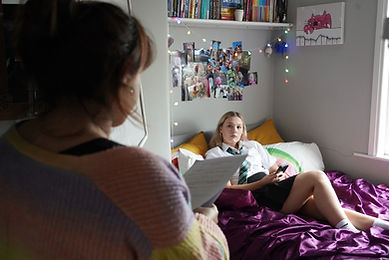
We asked two intimacy coordinators to join our crew and I cannot express how invaluable their presence was. Not only to the actors, but also to myself as a director. Due to my experience in pastoral care and safeguarding children, I knew how hugely important it was that everyone on set was comfortable and happy and that we had everyone’s consent to choreograph intimate movements.
These were not easy scenarios to write, rehearse and direct - and full disclosure here, I cried multiple times throughout the filming. Sometimes it was how harrowing some of those scenarios were, but also at the end with how proud I was of the whole team for carrying out this project. If we can make the difference to even just one young person, then that makes it worth it.
The Constabulary’s research showed that encouraging effective communication and empowering young people to have positive conversations with their peers and their partners is essential to helping reduce sexual offending.
Even though we were highlighting some of the issues around consent, we also wanted this campaign to educate around the behaviours that we do want to see.
It is however, far too simple to present what we think would be the ‘ideal’ scenario, because quite frankly there aren't any, human behaviour is far too complex; however, what we could do was to teach young people about social cues, and normalise open and honest conversations to try and steer them away from the outcomes shown in the ‘A’ endings of the films.
We looked at the COM-B model, cited here from an online resource by Social Change UK, which gives a great visual demonstration. To summarise a definition of this:
The COM-B model proposes that there are three components to any behaviour: Capability, Opportunity and Motivation. If we want young people to behave in a particular way, they need to feel they have the capability to change their behaviour, an opportunity which we as educators and protectors need to give them, for them to be motivated to carry out the desired behaviour.
THE RESULTS
I’m incredibly proud of how successful the campaign has been. Since its launch, the campaign has moved beyond being just a classroom resource, to becoming a national benchmark for how police forces engage with young people. The success of the project is reflected not just in the numbers, but in the shifting attitudes across Cheshire.
NATIONAL RECOGNITION
In 2025, Cheshire Constabulary was graded "Outstanding" at protecting vulnerable people. His Majesty’s Inspectorate (HMICFRS) specifically praised the force’s innovative use of media campaigns, citing our consent films as a primary reason for this success.
The 2024-2025 State of Policing Report highlighted the campaign as a national example of best practice, noting its "crucial role in making sure victims receive timely and appropriate assistance."
The campaign’s rollout has also seen a huge uptake across the county, directly impacting how students think about their own safety and rights and how the policing support has continued:
As of May 2026, 82% of all secondary schools in Cheshire had accessed and implemented the campaign resources.
The campaign has been used nationally to comms and policing colleagues across the country, including the College of Policing, the NPCC and the policing minister.
The 2025 crime figures showed an increase in reported sexual offences. Police leaders have welcomed this as a "positive increase," attributing it to the campaign giving victims the confidence and vocabulary to come forward for the first time.
During workshops with the Cheshire Youth Commission, students reported that the films helped "normalise" conversations that were previously considered embarrassing, moving the topic from a "taboo" social issue to a recognised criminal boundary.
MEDIA AND PEER ENGAGEMENT
Our creative approach, which was to emulate the social media content teenagers consume daily, proved to be the right choice.
The campaign was featured in the 2025 BBC documentary Hunting The Online Sex Predators. The programme showed students at The Whitby High School engaging with the scenarios, proving that the films hold attention where traditional textbooks fail.

BBC Northwest Tonight covered the campaign in a special, reporting from Whitby High School. The BBC interviewed students about how they felt and what they learned from watching the videos and engaging with the campaign.

There was also a written BBC article, covering the campaign and featuring some of the data that had initially influenced my script writing.

The 2026 Youth Commission Annual Report, based on engagement with over 1,400 young people, found that the interactive nature of our films encouraged 50% of participants to say they now felt more empowered to discuss boundaries with their friends and partners.
"The increase in sexual offences matches the national trend, but in Cheshire, it reflects the success of our Consent Campaign. It shows we are successfully educating young people and encouraging them to have the confidence to come forward."
Deputy Chief Constable Michael Evans, July 2025
THE FUTURE
Although I've handed the reins back over to the Constabulary, their hard work continues.
The campaign has officially moved into its next phase, which is now showing a heavy focus on Support for Parents.
The project is now being marketed to "key community influencers" and parents to ensure that the education started by the films in the classroom is being reinforced at home.
The new resources provide parents with "Top Tips" on using media, films, and TV programmes as "casual teachable moments", which gives a direct nod to the campaign films.
The campaign was taken on the road, where a fleet van was turned into a mobile consent diary room, where members of the public were shown the videos and encouraged to discuss and debate.

Image credit: cheshirepolice.co.uk | Police roadshow sparks conversations about consent across Cheshire
MY FINAL THOUGHTS
Reflecting on the whole journey, from reading the initial data to seeing the films being discussed in classrooms across Cheshire, has been a deeply personal experience for me. My time in the classroom taught me that young people are incredibly resilient, but they are also navigating a world that is far more complex and digital than the one I grew up in. They deserve a language for consent that feels as modern and nuanced as their daily lives.
I am incredibly proud of what we have achieved with this campaign. By moving away from textbook lectures and embracing a cinematic, social media style, we started to bridge that gap between "police advice" and "real life." The fact that so many schools have already engaged with these resources is just testament to how much we need to continue this conversation.
However, the work doesn’t end here. Whether you are a parent, a teacher, a police officer, or a creative, we all have a duty of care to ensure these conversations continue. If these films empower just one young person to set a boundary, or give one victim the confidence to speak up, then it’s worth it.
We can’t change the culture overnight, but we can change the way we talk to each other. It starts with us, it starts with our children, and most importantly, it starts with a conversation.
CAMPAIGN CAST & CREW
CAST
Josie Harrup
Sophie Curtis
Haleem Clift
Elora Dummett
Robert Paul
Mia Saunders
Rufus Firth
Charlie Tinson
Casting Agent - Rhianwen Bailey, Phoenix Casting Agency
CREW
Yas Haghighat - Writer & Director
Rob Holder - 1st AD
Vincenzo Di Matteo - Business Development Director
Louise Cole - Editor
Luke Spurgeon - Editor, Sound Mix
Tomoi Summers - Director of Photography
Joe Otter - Sound Recordist
Ben Davies - Camera Assistant
Theo Cockrean - Camera Assistant
Lucy Rowe - Production Assistant
Georgia Luckman - Production Assistant
Lex Kaby - Intimacy Coordinator
Hope Thain - Intimacy Assistant
With Thanks to Visual Impact Rental, Bristol